





Trusted by 500+ homeowners over the last 20+ years
Serving Minneapolis & Twin Cities Metro
Your Trusted Local Insulation Experts in Stillwater
We are a local, owner-operated insulation company dedicated to helping Twin Cities families make their homes more energy-efficient and comfortable.
Travis personally manages every job site from start to finish to ensure professional craftsmanship and a clean, thorough installation. Our team takes care of 100% of your local utility rebate paperwork for you, making the entire home upgrade completely simple and frictionless.
Insulation Services
Insulation Types We Install in Stillwater
We offer three proven insulation materials, each matched to your home’s specific needs and budget.
Where We Install Insulation in Stillwater
We insulate every part of your home or building, from the attic down to the crawl space.
Types of Properties We Insulate
From single-family homes to large agricultural buildings, we bring the same certified expertise to every project.
Why Stillwater Homeowners Choose Spray Foam
Minnesota winters demand insulation that actually performs
Stop Winter
Drafts
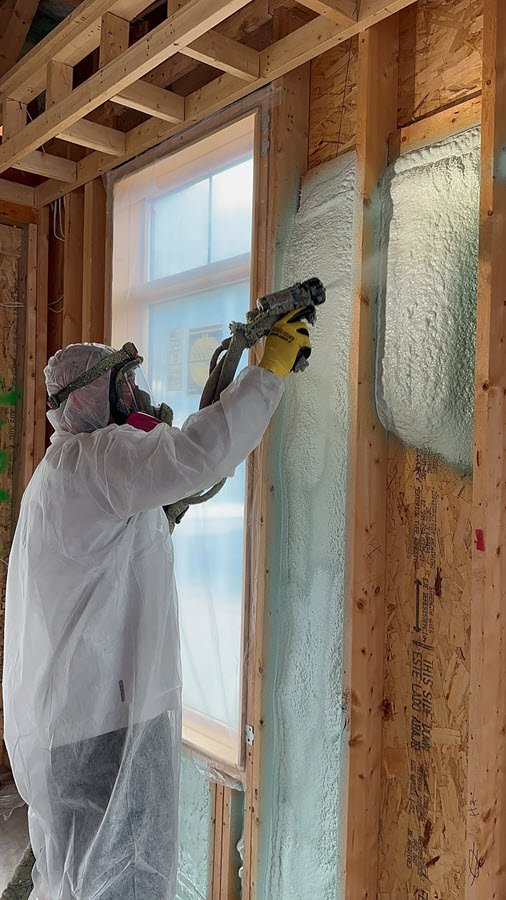
Spray foam expands to fill every crack and gap, an airtight seal fiberglass batts cannot match. No more cold spots or uneven heating in your Stillwater home.
Lower Energy
Bills
ENERGY STAR estimates about 15% savings on heating and cooling from air sealing plus insulation. Many Stillwater projects also qualify for utility rebates.
Increase Home Value
Buyers notice a home that stays comfortable year-round. Insulation pays you back twice: lower bills while you live there, stronger appeal when you sell.
Reduce Exterior Noise
Open-cell spray foam is an exceptional sound absorber. It fills the wall cavity completely, so rooms near busy roads, flight paths, and neighbors feel noticeably quieter.
Help Stop Ice Dams
Ice dams start when heat leaks into the attic and melts the snow on your roof. Sealing those air leaks first, then adding insulation, keeps that heat in the house.
Eco-Friendly
Choice
Reducing your energy consumption is one of the most impactful things you can do for the environment. Spray foam lasts the life of the home without settling or losing R-value.
Insulation for Stillwater Homes
The houses up on the North Hill and the South Hill are the oldest residential stock we work on anywhere, and they were framed a way almost nobody frames anymore. In an 1880s balloon-framed house the wall studs run continuously from the sill plate all the way to the attic, with no fire blocking between the floors. What that means in January is that your exterior wall cavities are one open vertical shaft from the basement to the roof. Heat rises up inside your walls and exits at the attic, and cold air gets pulled in at the bottom to replace it. That is why an old Stillwater house can have a working furnace, storm windows, and still feel cold six feet from a radiator. It also means loose fill blown into one of those walls will settle over the years and leave the top third empty. The way that wall gets insulated correctly is dense pack, packed to a density that will not settle, and on a finished house we can do it from the outside by taking the siding off and putting it back when we are done.
Common Insulation Problems in Stillwater Homes
Balloon-framed walls with no fire blocking turn every exterior cavity into a chimney. Stone and rubble foundations under the older homes are cold, damp, and irregular, so nothing standard fits against them. The sloped and knee-walled upstairs rooms in Victorians and story-and-a-halfs are the worst rooms in the house in both seasons. Many of these homes have been added onto two or three times over 140 years, so the envelope changes construction type every twenty feet, and the weak point is usually where two eras meet.
Call Spray Foam Insulation Plus today for a free energy-audit of your Stillwater home.
What Our Customers Say
"These guys are great!! They arrived on time, were efficient in their work process, and explained the work to me in detail so I could fully understand what I was paying for. And one more plus – they were nice guys who take pride in their work. I would highly recommend Spray Foam Insulation Plus for your project." – John R., Minneapolis
How It Works
From first call to finished project in 4 simple steps,
Free Insulation Inspection
We come out to your house to track down exactly where your expensive heat is escaping and find your hidden drafts.
Simple,
Flat-Rate Quote
You get a clear price with zero hidden fees, and we figure out exactly how much Xcel or CenterPoint rebate cash you qualify for.
Clean,
Fast Installation
Travis personally oversees the job to ensure your home is sealed up tight, and we clean up every speck of mess before we leave.
Guaranteed
Year-Round Comfort
You finally get to enjoy a warm, quiet house with lower monthly energy bills, all backed by our 15-year workmanship guarantee.
Want Ballpark Pricing? Call and the Owner Answers.
We don’t publish per-square-foot prices because material costs change quickly. Call and you talk to Travis, the owner: straight answers, current ballpark numbers in minutes, and a firm quote after he sees your project. No call center, no pressure.
Frequently Asked Questions
Can an 1890s house on the North Hill be insulated without tearing out the plaster?
Yes, and that is usually the right approach on a house with original interior woodwork and plaster worth keeping. We work from the outside: pull the siding off a section, drill, dense pack the cavities to a density that will not settle, and put the siding back. Nothing inside the house gets disturbed. This is the same method for any finished home where demo is not on the table. On a house that has already had cellulose blown in loose decades ago, we often find the top of those cavities empty, which is exactly what dense pack is designed to prevent.
Why does the heat seem to go straight up the walls in an old Stillwater house?
Because in a balloon-framed house it literally does. The studs run unbroken from the sill to the attic, so there is no blocking between floors to stop air moving inside the wall. Warm air in the cavity rises, escapes into the attic, and pulls cold air in at the basement band to replace it. This is the mechanism behind a whole list of complaints people usually treat separately: cold floors, a drafty first floor, an attic that is warmer than it should be, and ice dams at the eave. You are not fixing four problems. You are fixing one stack effect, and it gets fixed at the top and the bottom of the wall, not in the middle.
Will this change how our house looks in the historic district?
Not from the street. Dense packing from the exterior means removing a course of siding, drilling the cavities, packing them, and reinstalling the same siding. When the work is done the wall looks like it did before. On homes where original siding is fragile or unusual, that is worth walking before we start so there is a plan for handling and reinstalling it rather than a surprise on day one. If your property sits under design review, check what your approval requires before scheduling, since the requirement is the city's, not ours.
Our stone foundation basement is cold and damp. What can be done?
Start with the rim joist band, because that is the highest return and the least invasive thing in the basement. On a house this age it is bare, and it is a framed member sitting right at grade with frozen ground against the outside of it all winter. Closed-cell foam there stops the conduction and the air movement together. The stone wall itself is a longer conversation and depends on how much water is actively coming through it. Foam over a wall that is still taking on water traps that water, so drainage and grading get settled before insulation does. Travis will tell you honestly if the basement is not the place to spend first.
Can adding insulation cause moisture problems in a 140-year-old house?
It can, and anybody who tells you otherwise has not worked on enough old houses. These buildings were leaky, and leaky buildings dry out constantly whether anybody planned it or not. Tighten one up without thinking about where moisture goes, and you can push condensation into a wall assembly that used to just breathe it off. That is why the walk-through before the bid actually matters here: what the exterior looks like, where water is going, whether there is a vapor barrier anywhere, and how the attic vents. On a Stillwater house the sequence of the work matters as much as the product.
Serving Stillwater and the Entire Twin Cities Metro
Same-week scheduling available for most locations in a 50-mile radius from downtown Minneapolis.
Neighborhoods we serve in Stillwater: North Hill, South Hill, Downtown Stillwater, Dutchtown, Croixwood, Liberty, Oak Park Heights border
Ready to Lower Your Energy Bills?
Get a free, no-obligation estimate from our BPI-certified team. Most quotes completed within 24 hours.